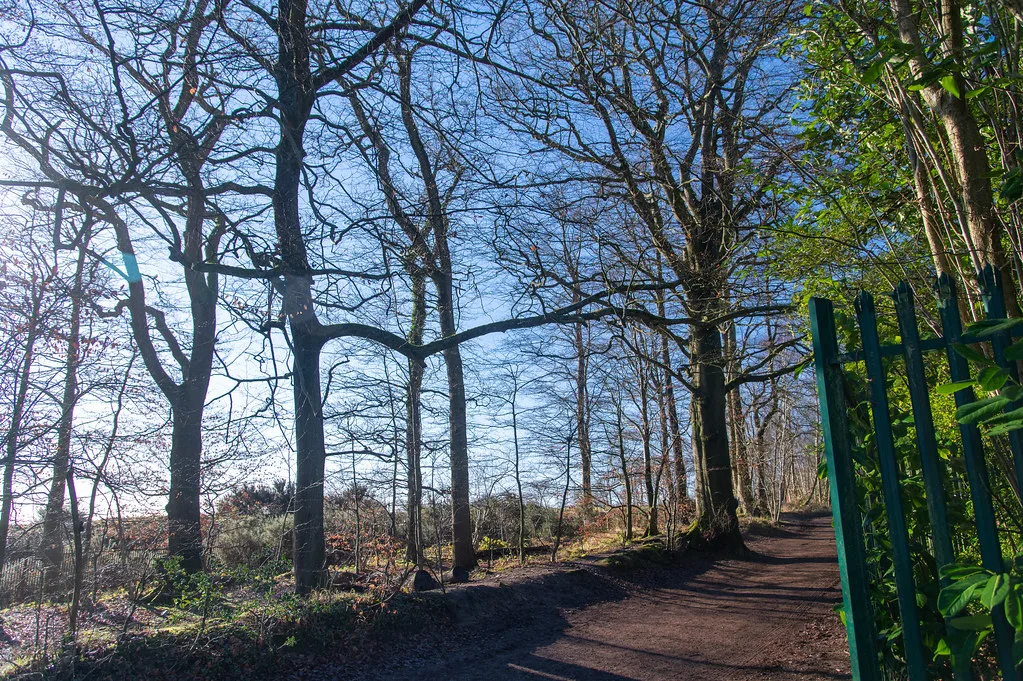

About 1,000 diseased ash trees will be felled on Reigate Hill, Banstead Downs and three other commons from October, at a cost of £295,000. Expect path closures.
About 1,000 ash trees are to be felled on five of the borough’s best-known open spaces this winter. Reigate and Banstead Borough Council’s Executive approved the contracts on 24 September. Work is due to start in October and must finish by 31 March 2027.
The trees have ash dieback, a fungal disease with no cure. The council says diseased trees close to paths, roads and boundaries are a growing safety risk.
The decision was published on 28 September in the Executive’s statement of decisions. It can be called in by councillors until Monday 5 October and takes effect the next day.
Where the trees will come down
The work is split into three contracts, which the council calls lots.
| Lot | Sites | Protected status |
|---|---|---|
| 1 | Banstead Downs and Park Downs | Site of Special Scientific Interest |
| 2 | Burgh Heath and Banstead Heath | Site of Nature Conservation Importance |
| 3 | Reigate Hill | Site of Special Scientific Interest |
The sites and their status are set out in the officer report to the Executive. It puts the volume at “approximately 1,000 ash trees across three Lots”. It does not say how many trees are on each site.
The report lists seven wards affected: Banstead Village, Chipstead Kingswood and Woodmansterne, Lower Kingswood Tadworth and Walton, Nork, Redhill West and Wray Common, Reigate, and Tattenham Corner and Preston.
What the contractors will do
Not every tree will be cut to the ground. The contract covers:
- full removal of affected trees
- monolithing and high stumping, where a standing trunk is left as habitat
- pruning nearby trees to protect them from the felling work
- hauling away timber and brash
- reinstating the ground afterwards
- traffic management and public safety controls
The report says standing and fallen deadwood will be kept “where it is safe to do so”.
Why now, and why outside contractors
The council’s own tree team is already dealing with smaller pockets of diseased ash. The report says the scale of the disease on these five sites needs specialist contractors “with greater capacity”.
The 31 March deadline is there to keep the work out of the main bird-nesting season.
The report also gives the legal reason. It says it is the council’s responsibility as landowner “to take reasonable steps to manage foreseeable tree-related risks”. Doing nothing was one of three options put to the Executive, and officers did not recommend it.
What it costs
The bill is higher than the council had set aside.
| Item | Amount |
|---|---|
| Set aside from reserves for ash dieback | £200,000 |
| Already spent from that sum | about £17,000 |
| Estimated contract value in the tender notice | £192,000 before VAT |
| Total cost of the three contracts | £295,000 |
| Extra funding approved, from reserves | £112,000 |
All five figures are from the report and its addendum.
Seven firms bid by the deadline of 8 September. Four were ruled out before the quality stage. One failed the minimum score on health and safety, and three failed on technical capability and experience.
That left little competition. The council’s anonymised results show only one compliant bid for Banstead Downs and Park Downs, and two each for the other lots. One firm won lots 1 and 2. A different firm won Reigate Hill.
The council has not named the winners. The names are in a part of the report that is closed to the public.
Will the trees be replaced?
The report says felling licence conditions require restocking wherever a gap in the canopy would not close within five years. The chosen method is natural regeneration, meaning the woodland is left to reseed itself. If that fails, the council must replant.
The Forestry Commission issues the licences. The report says the UK Forestry Standard carries “a strict presumption against the permanent loss of woodland cover”.
What it means for you
- Expect closed paths this winter. The report says temporary closures, exclusion zones, diversions and traffic management may all be needed on these sites.
- You should get two weeks’ warning. The council has committed to public notices at least two weeks before the agreed start date. None had appeared on the council’s news page when we checked on 29 September.
- Keep out of the taped-off areas. Contractors will set up risk zones with signs and banksmen while trees are being felled.
- Some roads may be affected. The contract allows for temporary traffic orders. We will add any that are published to our Reigate roadworks page.
- Exact start dates are not yet public. Contract award and mobilisation are expected in October. We will report the site-by-site programme when the council publishes it.
Have your say