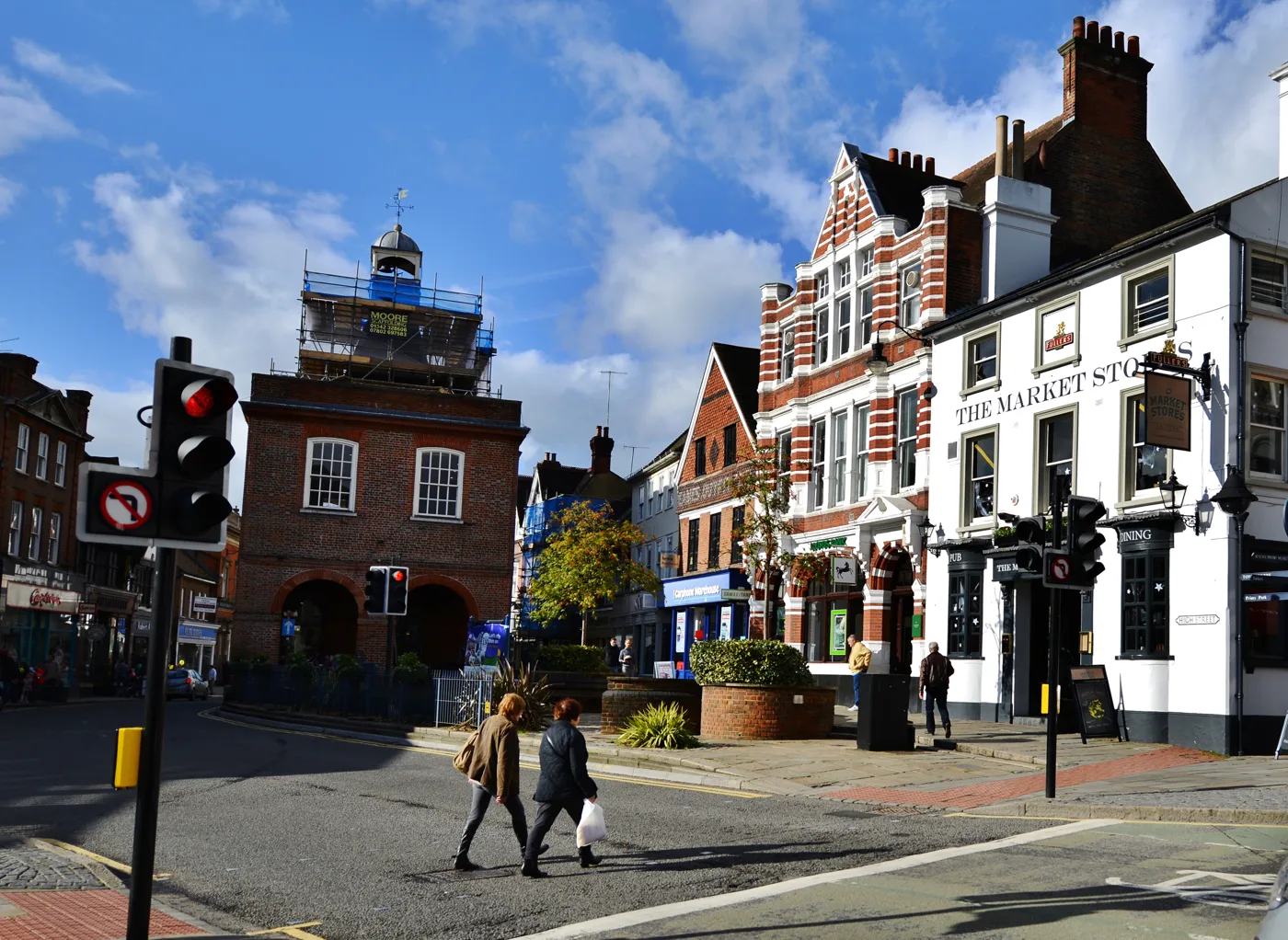

How to search Reigate planning applications on the council's portal, read the plans, comment or object, speak at committee, and what is changing in 2026.
Every one of the Reigate planning applications submitted in the borough is published online, free, and open to anyone to read whether you live next door or not. Most people only discover a scheme exists when the scaffolding goes up. This guide covers where the register lives, how to search it, how to comment in a way that actually counts, how to speak at the Planning Committee, and the two changes in 2026 that will shape what gets built across Reigate, Redhill, Banstead and Horley.
Where to find Reigate planning applications
Reigate & Banstead Borough Council publishes everything on one system, an Idox Public Access portal:
You do not need an account to look. Search by address, postcode, keyword or reference and you get the drawings, the officer’s reports, the consultation dates and any comments already submitted. The council links to it from its planning applications page as the single route to view applications, appeals and documents.
If you have heard it called the Reigate planning portal, that is the same system. It covers the whole borough, so Redhill, Banstead, Horley, Merstham, Tadworth and the villages are all on it, not just Reigate town.
How to search, step by step
The council’s own viewing planning applications guidance boils down to four steps:
- Open the planning application search.
- Enter a reference number, postcode or keyword and search. If you are not sure of the exact address, keep it loose and narrow from the results.
- Open the application you want.
- Click through to the related or associated documents for the plans, elevations and officer reports.
If a decision notice is missing from the site, the council asks you to email landcharges@reigate-banstead.gov.uk rather than assume it does not exist. Applications from before 2006 are not all on the portal and are handled through the council’s planning history searches service instead. If you have no computer at home, the Town Hall on Castlefield Road, Reigate RH2 0SH has public machines from 9am to 5pm Monday to Thursday and 9am to 4.45pm on Friday.
The weekly list, and how to stop missing things
Running the same search every week is the habit nobody keeps. The portal has a weekly list instead, showing everything registered or decided across the borough in a given week, filterable by ward or by parish, so you can watch just Banstead Village, or Earlswood and Whitebushes, or the Horley Town Council area. The council publishes guidance on the weekly list, including video tutorials and PDF guides covering geographical areas and appeals lists.
Registering a free account is the single most useful thing you can do here. It lets you save a search, track individual applications and manage your comments, so you hear about a neighbour’s plans while there is still time to respond.
How to comment, and what actually counts
Comments are made through the Comments tab on the application’s own page in the portal. The consultation deadline is shown on that page, so check it there rather than counting days yourself.
Here is where objections succeed or fail. A planning decision can only turn on material planning considerations, which the council assesses against government guidance and its own adopted policy, and it points residents to the Planning Portal’s explanation of material considerations for the definition.
In practice, points that carry weight include the effect on neighbours’ light and privacy, highway safety and parking, design and the character of the area, noise, loss of trees or green space, drainage, and conflict with adopted planning policy. Points that carry little or no weight include loss of a private view, the effect on your property’s value, competition with an existing business, and who the applicant is. Writing in the language of the planning merits is the difference between a comment that is weighed and one that is merely recorded.
Three procedural things to know before you send:
- Your comment is public. Under the Local Government (Access to Information) Act 1985 anyone may examine representations received, so your comment will be open to public viewing. The council does not publish personal telephone numbers, email addresses or signatures.
- Petitions must be on paper. The council states it does not currently accept electronic petitions either supporting or objecting to an application. A petition needs to be in paper form with signatures included, per the planning publicity statement.
- Householder appeals close the door. If a householder application is refused and the applicant appeals on written representations, your comments are forwarded to the Secretary of State and there is no further opportunity to comment at appeal stage. Say everything the first time.
Who decides, and how to speak at committee
Most applications are decided by planning officers, not councillors. Major applications generally go to the Planning Committee with an officer’s report, though the council’s rules also allow the Head of Building and Development Services to refuse permission on major schemes, so not every major application reaches it.
The committee normally meets once every four weeks on a Wednesday evening at 7.30pm at the Town Hall in Reigate, and the public may attend. The agenda is published one week before, and dates are on the council’s committee pages on ModernGov.
Public speaking runs to a strict protocol, set out on the council’s speaking at planning meetings page:
- A maximum of two speakers in favour and two against, with three minutes each.
- The deadline to register is 5pm on the Monday before the committee.
- Where an application is recommended for approval, members of the public may speak if they have already made written representations, and the applicant or agent has a right of response. The applicant may not speak if there are no objectors.
- Where an application is recommended for refusal, the applicant may speak, and objectors get a right of response. Objectors may not speak unless the applicant has registered.
- A parish or town council representative gets preference within the two slots if more people register than there is room for. Residents’ associations get no preferential right.
- Speaking is in addition to written representations, and the onus is on you to check whether an application is going to committee.
That last point matters. Nobody rings to tell you, so writing in remains the reliable route and speaking is the bonus.
Two things changing in 2026
A new Local Plan to 2044
The bigger decision than any single application is the new Local Plan, which will set where development can go across the borough to 2044. Full Council agreed on 22 July 2026 to publish a notice of intention to commence, the first formal step under the government’s reformed plan-making system, together with a timetable, as the council announced.
The first consultation, a six week scoping consultation, is scheduled to start in September 2026. Adoption is expected by mid-2029, and the new plan then replaces the Core Strategy of 2014 and the Development Management Plan of 2019 that currently guide decisions.
There is a twist. Responsibility for plan-making passes to the new East Surrey Council on 1 April 2027, well before this plan is finished. Cllr Kate Fairhurst, executive member for place, planning and regulatory services, has said the government is encouraging legacy councils to press on regardless, as the best way to keep control over speculative development. If you want a say in where housing goes near you, the Local Plan 2044 pages are the ones to watch, not the weekly list. We follow the plan’s progress, and the borough’s biggest live schemes, on our Reigate planning news page.
Planning controls on small HMOs
The council is consulting on an Article 4 direction that would remove permitted development rights for converting family homes into small houses in multiple occupation, meaning those of three to six residents. If confirmed, each conversion would need a full planning application, letting the council weigh location, design, accommodation standards and the effect on neighbours. Larger HMOs of seven or more residents already require permission.
The consultation runs eight weeks, from 30 July to 24 September 2026, and the direction would take effect on 30 July 2027 if confirmed. Cllr Fairhurst said the council had seen an increase in HMOs and complaints about them, and that the proposals “are not about preventing them” but about putting planning checks in place, per the council’s announcement.
Both are worth more of your attention than any single application, because they set the rules every future application is judged against. The same council will hand over its council tax and bin collection responsibilities to East Surrey on the same date.
Frequently asked questions
How do I find planning applications in Reigate?
Search the council’s portal at planning.reigate-banstead.gov.uk/online-applications by address, postcode, keyword or reference number. No account is needed to view. The weekly list shows everything registered or decided in a given week, filterable by ward or parish.
What is the Reigate planning portal?
It is the council’s online planning register, an Idox Public Access system covering the whole of Reigate & Banstead borough, including Redhill, Banstead and Horley. It is free to search without signing in, and holds the plans, documents, case officer details and comment deadlines for each application.
How do I object to a planning application in Reigate?
Find the application on the portal and use its Comments tab. Frame your points around material planning considerations, such as effect on neighbours, highway safety, design or policy conflict, rather than personal views or property values. The deadline is shown on the application’s own page.
Are comments on Reigate planning applications public?
Yes. Under the Local Government (Access to Information) Act 1985 representations are open to public inspection. Personal telephone numbers, email addresses and signatures are not published.
Can I speak at the Reigate Planning Committee?
Sometimes. A maximum of two speakers for and two against are allowed, three minutes each, and you must register by 5pm on the Monday before the meeting. Whether objectors or the applicant may speak depends on whether the officer recommendation is approval or refusal.
How do I see planning applications before 2006 in Reigate?
Older applications are not all on the portal. The council handles those through its planning history searches service, linked from the viewing planning applications page.
Sources
- Reigate & Banstead Borough Council, planning applications and the planning application search portal
- Reigate & Banstead Borough Council, viewing planning applications and weekly list of planning applications
- Reigate & Banstead Borough Council, comment on a planning application and planning publicity statement
- Reigate & Banstead Borough Council, speaking at planning meetings and the after you apply step-by-step guide
- Reigate & Banstead Borough Council, Local Plan 2044 and work begins on the new Local Plan
- Reigate & Banstead Borough Council, consultation on planning controls for small HMOs
- Planning Portal, what are material considerations
Checked against Reigate & Banstead Borough Council’s planning pages on 4 August 2026. Consultation deadlines and committee dates change, so confirm on the portal before relying on a date.
Have your say